BearWise Press Room
About BearWise
BearWise® is an education and outreach program founded, supported and funded by member state wildlife agencies. Today BearWise is a national program of the Association of Fish and Wildlife Agencies (AFWA).
BearWise is managed by a national team of state agency bear biologists and communications professionals from the private sector, working together to ensure that no matter where people live, play or travel, they get the same consistent about living responsibly with bears.
Sound Science, Real World Solutions
The BearWise team works together to ensure that BearWise content, messaging and materials reflect both sound science and the everyday realities of living, working and recreating in bear country.
BearWise® Created by bear biologists. Supported by State Wildlife Agencies. Dedicated to helping people live responsibly with bears.
How to Write, Talk (and Think) BearWise
You have the power to help everyone understand how and why people (often unintentionally) cause most human-bear conflicts. And even more importantly, how living BearWise can prevent them.
Communication Guide Contents:
Let’s Talk Bears – 1
– Consequences of Attracting Bears
– Bears Are Not Furry People
– Don’t Blame the Bear
Responsible Communication – 2
Terms to Avoid, Phrases to Use – 3
BearWise as Your Resource – 4
– How to Use Our Name & Content
– Interviews, Experts, Research
Using BearWise Content
BearWise outreach materials (free downloads in our store) may be reproduced as is and shared, posted, printed.
The BearWise article bank features dozens of articles meant to be shared. Our primary focus is on easy-to-understand, proven ways to prevent conflicts with bears at home and outdoors and help keep people safe and bears wild. Our regular features on bear behavior and biology help people understand what drives bear behavior.
Subscribe to receive BearWise articles and announcements as soon as they are published.
When sharing/reprinting BearWise articles: BearWise content is copyrighted. You may reprint, redistribute or excerpt without changing or altering content in any way. Required credit line: Courtesy of BearWise® | BearWise.org
Please notify us where BearWise content will be used.
To request written permission for any other use, please contact us.
Using BearWise Photos/Videos: Many photographers have granted BearWise the right to use their photos because they support the BearWise mission. For permission to use a BearWise photo, please contact support@BearWise.org.
View Articles by Category
Using the BearWise Name / Logo
The name BearWise® and the BearWise logo are registered trademarks, and must be used in accordance with our guidelines. Download BearWise Name & Logo Usage Guide.
BearWise is one word, with a capital B and W.
The BearWise brand name should not be altered. BearWise is not an organization or group. Misuse makes BearWise seem like just a clever play on words rather than a national program.
-
No quotation marks (“BearWise”)
-
Never in possessive form (BearWise’s)
-
Do not use lowercase (bearwise or Bearwise)
-
Not hyphenated (Bear-Wise)
The registered trademark symbol ® is required with the first or primary use of BearWise in any printed or digital materials or messaging (press releases, newsletters, blogs, etc).
When listing our website, please capitalize the B and W: BearWise.org
Request hi-res logo (provide your name, organization/publication, phone number)
The BearWise® name and logos are registered trademarks of the Association of Fish & Wildlife Agencies and may not be used on educational, promotional or commercial materials or products without prior written approval from BearWise.
BearWise in the News
“There’s a Bear Hibernating Underneath Your Deck. Now What?”
December 16, 2025 | Realtor.com
Nationwide coverage
“Twelve rehabilitated bear cubs returned to the wild”
December 11, 2025 | The Coastland Times
Manteo, NC
“Colorado Sees Above-Average Number of Bear Reports in 2025”
December 10, 2025 | Pagosa Daily Post
Pagosa Springs, CO
“TIBT Toolkit: How to Protect People, Property – and Bears – in the Tahoe Basin”
December 9, 2025 | Tahoe Daily Tribune
Lake Tahoe, Tahoe Basin, California/Nevada
Tahoe Interagency Bear Team (TIBT)
“Video shows bear crashing Gatlinburg Christmas parade. Watch”
December 10, 2025 | Knoxville News Sentinel
Knoxville, TN
“Watch: Bear steals Ring camera…twice”
November 24, 2025 | Fox61
East Granby, CT
BearWise Press Releases & Announcements
Chickens are fast food for bears. Three chickens, a dozen eggs and a pound of chicken feed add up to an astonishing 7,000 calories. No wonder bears are attracted to a backyard full of chickens.
Ordinary coops and chicken wire can’t protect chickens from a hungry bear. Losing your flock is heartbreaking; replacing it is expensive. And bears that help themselves to an easy chicken dinner often pay with their lives. Don’t wait until it’s too late.
Learn how being BearWise can protect chickens and keep bears wild with the new BearWise Bulletin #6: Raising Chickens in Bear Country.
Get Practical Tips On:
- Coop design, construction and location
- Bear-resistant feed storage
- Lights and Locks
- Fencing solutions that keep bears (and the many other critters that eat chickens) out and flocks safe.
How BearWise Can Help
- Info on bear-resistant containers
- Bulletin #6 Raising Chickens in Bear Country
- Bulletin #5 Electric Fences Keep Bears Out
- Links to helpful websites
Cost & Format: Free, print-ready PDF (2 pages)
Where to Find: Download
BearWise®. Created by bear biologists. Supported by State Wildlife Agencies. Dedicated to helping people live responsibly with black bears.
Copyright © 2025 Association of Fish & Wildlife Agencies
It’s garbage to us. It’s dinner for days for bears. Trash attracts bears because it’s a smelly, highly concentrated and dependable source of easy, high-calorie meals. Bears are very practical; if the risk of venturing around people places produces no reward, they will put their energy into foraging in the wild.
 Preventing bears from getting their paws on your garbage helps keep people and businesses in bear country safe and bears wild. The BearWise “Stash, Latch, Secure Your Trash” bulletin empowers residents and businesses to do just that.
BearWise Trash Storage Solutions That Work
- Dos and Don’ts
- Build or buy a trash enclosure
- Use a bear-resistant container: what to ask your waste services provider; how to modify an existing container
Power Up to Protect: Electrifying solutions that keep bears out: electric fencing and unwelcome mats
BearWise Tips
- Six Tips for Homeowners
- Six Tips for Businesses
- Using motion-activated devices until you implement a permanent solution
- Composting food scraps
How BearWise Can Help
Cost & Format: Free, print-ready PDF (2 pages)
Where to Find: Download
BearWise®. Created by bear biologists. Supported by State Wildlife Agencies. Dedicated to helping people live responsibly with black bears.
Copyright © 2025 Association of Fish & Wildlife Agencies
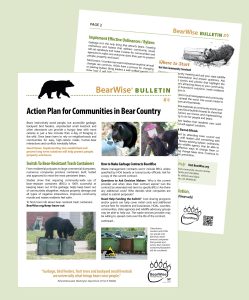
Bears instinctively avoid people, but accessible garbage, bird feeders, small livestock and other attractants can provide a hungry bear with more calories in just a few minutes than a day of foraging in the wild. Once bears learn to rely on neighborhoods and businesses for easy, high-calorie meals, human-bear interactions inevitably follow.
To help communities and HOAs, BearWise has released Bulletin #4: “Action Plan for Communities in Bear Country” which focuses on how implementing two established and proven long-term solutions will help protect people, property and bears. This two-page bulletin provides the practical why, what and how-to for preventing community-wide issues with bears.
#1: Switch to Bear-Resistant Trash Containers (BRCs)
- Do BRCs work
- How to make garbage contracts BearWise
- Help with funding the switch to BRCs
#2: Implement Effective Ordinances / Bylaws
- Why ordinances and bylaws work
- Examples of effective provisions
- Where to find existing ordinances / bylaws
How to Get Started
- Get residents and businesses involved
- Take steps to generate awareness and support for BearWise solutions
- How to work with leaders and elected officials
- Tap into helpful BearWise resources
Who’s Using: HOAs, neighborhoods, cities/towns
Cost & Format: Free, print-ready PDF (2 pages)
Where to Find: Download
BearWise®. Created by bear biologists. Supported by State Wildlife Agencies. Dedicated to helping people live responsibly with black bears.
Copyright © 2024 Association of Fish & Wildlife Agencies
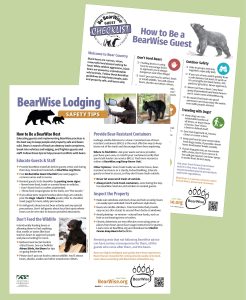 Bears belong in bear country. Bears don’t belong in trash containers, picnic grounds, swimming pools, vehicles, buildings and lodging. Two new fact sheets from BearWise will help lodging providers and their guests keep bears where they belong and out of where they don’t.
The Be BearWise Guest Checklist is organized into seven categories and emphasizes safely stashing the trash, discouraging bear break-ins and why feeding bears is so dangerous. There are tips on cookouts, outdoor safety and what to do if you encounter a bear and important precautions for people traveling with dogs.
The BearWise Lodging Safety Tips Fact Sheet is packed with valuable information on how to be a BearWise host, useful tips for training staff and educating guests from reservation to checkout, how to bear-proof your property (did you know bears can open car doors and French doors?), and links to other useful resources.
Who’s using: Short-term rentals, resorts, camps, clubs, homeowner associations, visitor centers, parks and forests, outdoor educators, libraries, NGOs.
Benefits: Help guests have a safe vacation, go home with happy memories and be inspired to post great reviews. Help staff do a better job of dealing with constant guest turnover and ongoing maintenance. Avoid messy cleanups and prevent expensive property damage. And feel good about helping to keep bears wild.
Cost & Format: Free, print-ready PDF (2 pages)
Where to Find: Download
BearWise®. Created by bear biologists. Supported by State Wildlife Agencies. Dedicated to helping people live responsibly with black bears.
Copyright © 2024 Association of Fish & Wildlife Agencies
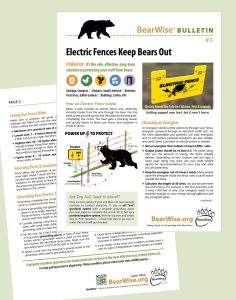 Electric fencing is widely recognized as the safest, most effective long-term solution to protecting people’s stuff from bears. But for first-time fencers, knowing that electric fences work is one thing; feeling comfortable choosing, installing and safely operating the fence that’s right for you is another. Luckily for people and bears, knowledge is power.
The BearWise “Electric Fences Keep Bears Out” bulletin is organized into six categories that cover how electric fences work, choosing an energizer, laying out fence wires, selecting posts and insulators, grounding a fence in any type of soil, and keeping fences in good working condition. Helpful graphics, handy tips and easy-to-follow guidelines take the mystery out of how to put this powerful tool to work.
What’s Getting Protected: Primary residences, vacation homes/cabins, beehives, chickens, small livestock, fruit trees, edible gardens, garbage, and more.
Benefits: When people use electric fencing to protect their stuff, they’re protecting bears too. Bears that try to crawl under, over or through an electric fence get a shocking lesson they won’t forget. Bears stay out. People, pets and stuff stay safe. And bears stay wild.
Cost & Format: Free, print-ready PDF (2 pages)
Where to Find: Download
BearWise®. Created by bear biologists. Supported by State Wildlife Agencies. Dedicated to helping people live responsibly with black bears.
Copyright © 2024 Association of Fish & Wildlife Agencies
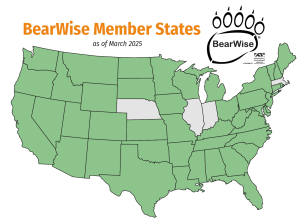
Washington D.C. (May 24, 2023) – The Association of Fish & Wildlife Agencies is excited to announce that BearWise has now been adopted by 39 states and is being utilized by people nationwide. BearWise meets the growing need for consistent information on living responsibly with black bears. This innovative program provides information supported by sound science and useful resources that give people, neighborhoods, communities, and businesses practical ways to prevent human-bear conflicts and help keep bears wild.
“BearWise offers a wealth of useful information and smart solutions that help homeowners, businesses and communities coexist with bears,” said Curt Melcher, Director of the Oregon Department of Fish and Wildlife and President of the Association of Fish & Wildlife Agencies. “This program delivers information people can understand and trust, and resources and tools people can use with confidence. The Association is proud to be part of such an impressive program.”
Black bears were once found over all of America’s forested lands, but as the country was settled, bear populations fell. Today, thanks to new attitudes and decades of enlightened conservation and management efforts, black bears have made a dramatic comeback over much of their historic range and are returning to many places where they haven’t been seen in decades. There are once again established bear populations in at least 40 states and frequent sightings in several more. More people than ever before are living in, visiting, and spending time outdoors in bear country. The combination of more people in bear country and more bears living in closer proximity to people creates more potential for human-bear interactions and conflicts. The need for a trusted nationwide resource that provides scientifically sound information about how to live responsibly with bears and avoid causing conflicts has never been greater.
“It’s not enough for a state wildlife agency to just educate people about bears. We need them to take action. BearWise provides many resources that help people prevent conflicts around their homes and communities as well as when they’re spending time outdoors in bear country. Agencies also benefit when visitors from BearWise states travel and bring their knowledge with them. Being BearWise is a way of life,” said Dan Gibbs, Black Bear Program Leader for the Tennessee Wildlife Resources Agency, and the Committee Chair for the BearWise program.
BearWise was developed by state agency bear biologists who wanted to make sure that no matter where people lived, played, or traveled, they got the same consistent message about coexisting with bears. Today the BearWise program is managed by a team of North American bear biologists and communications professionals and supported by the Association and the BearWise member state wildlife agencies.
Visit bearwise.org and discover why people all over North America rely on BearWise for information they can trust and resources they can use.
BearWise® has a prominent role at 6th International Human-Bear Conflicts Workshop in Lake Tahoe, Nevada in October 2022. A five-member BearWise panel will discuss how BearWise builds bridges, promotes partnerships and works to bring people together at the national, state, community and neighborhood levels.
 The Human-Bear Conflicts Workshop is a unique gathering that occurs every three or four years and brings together wildlife managers, social scientists, educators, researchers, groups and organizations and people from all over the world and all walks of life who are involved in better understanding, resolving and preventing human-caused conflicts with bears. Submissions are reviewed and voted in by a large panel of independent judges, so it is an honor to be chosen to share the BearWise story with this international audience.
Learn more at www.humanbearconflicts.org
After more than 2 years of research and development, the Southeastern Association of Fish and Wildlife Agencies (SEAFWA) launched BearWise.org in 2018. Their mission: help people live more responsibly with black bears by providing consistent, science-based information and proven, practical ways to prevent conflicts, resolve problems, and develop BearWise communities to keep bears wild.
The BearWise® program was pioneered by bear biologists from SEAFWA’s 15 member states, where about 70,000 black bears are trying to share space with more than 124 million people. Growing populations of both bears and humans are leading to a rising number of human-bear encounters and conflicts.
The dedicated BearWise Committee, which is a part of SEAFWA’s Large Carnivore Working Group, is co-chaired by Dan Gibbs, Tennessee Wildlife Resources Agency, and Maria Davidson, Louisiana Department of Wildlife and Fisheries. The communications team includes Linda Masterson, author of Living with Bears Handbook.
“Bears have no idea when they cross from public to private lands or from one state to another; that’s why a regional effort to reach out to people who live, work and recreate where bears live too makes so much sense,” explained Gibbs.
The BearWise store offers a range of educational materials, including free print-ready handouts. Anyone interested in receiving timely information about living with bears can subscribe to BearWise emails. As the BearWise program continues to grow and develop, additional resources will be added to the website for bear managers and professionals as well as members of the public, including homeowner associations and municipalities.
Founding member states include Alabama, Arkansas, Florida, Georgia, Kentucky, Louisiana, Mississippi, Missouri, North Carolina, Oklahoma, South Carolina, Tennessee, Texas, Virginia, and West Virginia.
BearWise, Helping People Live Responsibly with Black Bears
Created and Supported by State Wildlife Agencies and Bear Biologists
BearWise Contacts
National Chairman:
Nate Bowersock, Missouri Department of Conservation
Nathaniel.Bowersock@mdc.mo.gov
Communications and Marketing Director:
Linda Masterson
media@bearwise.org, 970-231-7500
To inquire about ordering outreach materials for a state agency:
support@bearwise.org
State Bear Management Information:
Every state wildlife agency has unique factors that steer state bear management policies and actions. To request information about bears in a specific state or a state-specific issue, incident, situation or action, contact the state wildlife agency directly. BearWise does not comment on these types of state-specific matters.