Backcountry
Food Storage & Safety Tips
If you are planning a trip into bear country, you’re not alone. The number of backcountry explorers has been steadily growing. Thanks to decades of enlightened management and conservation, the number of bears in the backcountry is growing too.
Before you hit the trail
- Food storage requirements and bear spray rules vary by region and jurisdiction (national park, state lands, national forest). Know before you go.
- Low-odor, dry, compact foods take up less space and are less attractive to bears. Tip: leave tuna packets at home.
- Choose biodegradable soaps and unscented personal care products when possible.
- Carry bear spray and know how to use it.
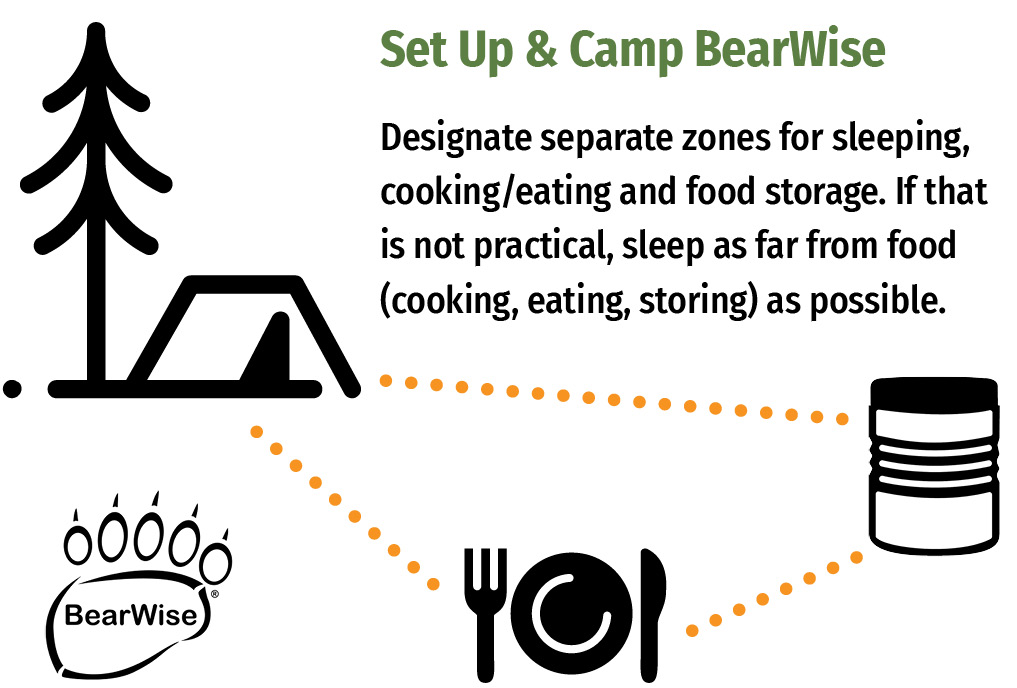
Set Up and Camp BearWise
If you arrive at your designated campsite and see obvious evidence of recent bear activity, take photos, then find another site. If you can’t relocate, be extra vigilant. Bears that have been rewarded for coming into camp often come back. Let authorities know as soon as you can.
Designate separate sleeping, cooking/eating and food storage zones with at least 70 big steps between each zone. If that’s not practical, cook, eat and store food as far away as possible from your sleeping zone.
Bears are more likely to explore between dusk and dawn. Cook and pack up food and attractants before dusk.
Wash cookware, dishes and clothes with food spills or odors. Dry them in your cooking area, not in your tent or sleeping area.
Sleep scent-free. Don’t use, eat, drink or store anything with an odor in your tent or sleeping bag. Yes, this includes bug spray, deodorant, toothpaste, mints and lotions.
Pack out all food scraps, peels and trash. Burning food or trash in the fire pit will attract bears. It also puts campers coming after you at risk. Odors and remnants remain long after you’ve moved on.
Even natural foods like apple cores teach bears to associate people, camps and trails with food rewards.
Tips from BearVault
- Use sturdy, resealable bags to separate toiletries, food and trash (including all food scraps and packaging) and store everything in your canister.
- Do a pocket check for small stuff like balm and mints; add to your canister.
- Bears are quick and agile. Keep canisters closed and locked unless you’re actively taking stuff in or out.
- Low odor doesn’t mean no odor. To a bear’s super-sensitive nose, nothing is completely odorless, including canned foods, freeze-dried foods in mylar, unscented toiletries, and packaged stuff.
- Strain wash water and broadcast it over a wide area far away from your camp and water sources. Stash any strained solids with your trash.
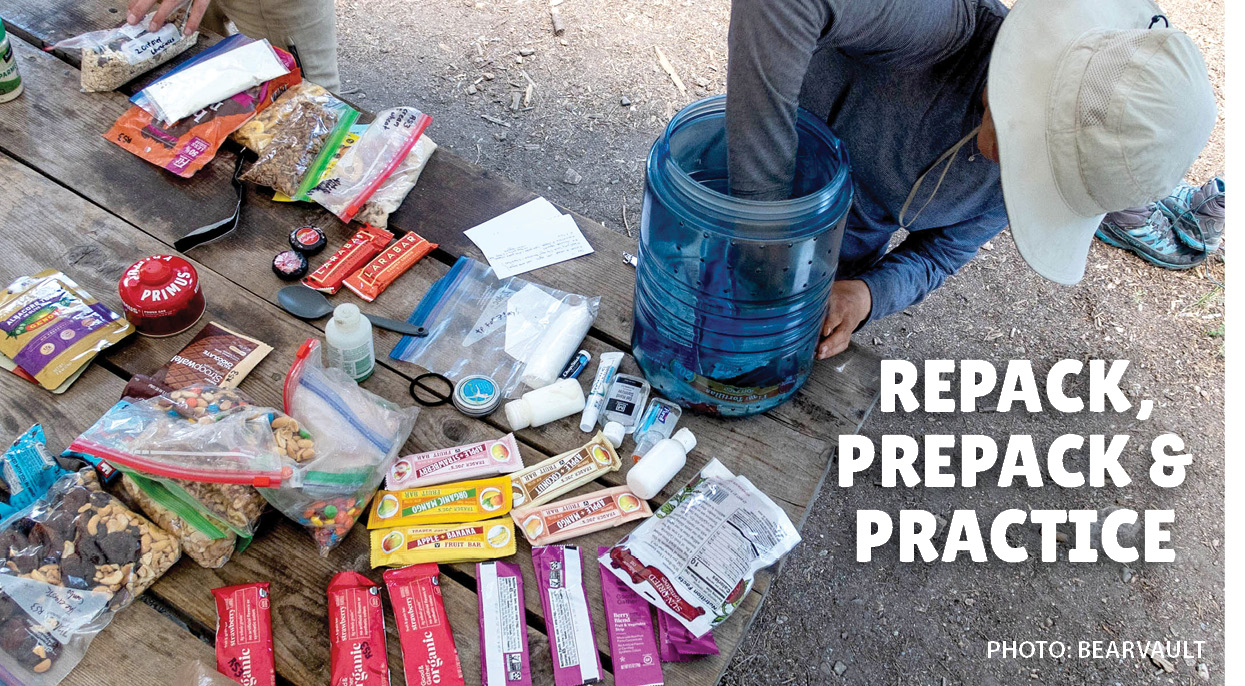

Repack food and supplies in resealable bags to save space, then prepack your canister. Practice opening, closing, locking your canister before you hit the trail. Find more tips at BearVault.com
If a Bear Comes Close to Camp
Bears are seldom aggressive and rarely injure people. However, bears that have learned that people often have lots of food can be persistent at trying to get their paws on some.
- If a bear comes near camp, let it know you are there. A loud human voice (no shrieking or screaming) is a great bear deterrent.
- Group together, make noise and wave your arms.
- Bears don’t like to be cornered. Always give bears an escape route.
- Get your bear spray ready, just in case.
- Never run from a bear.
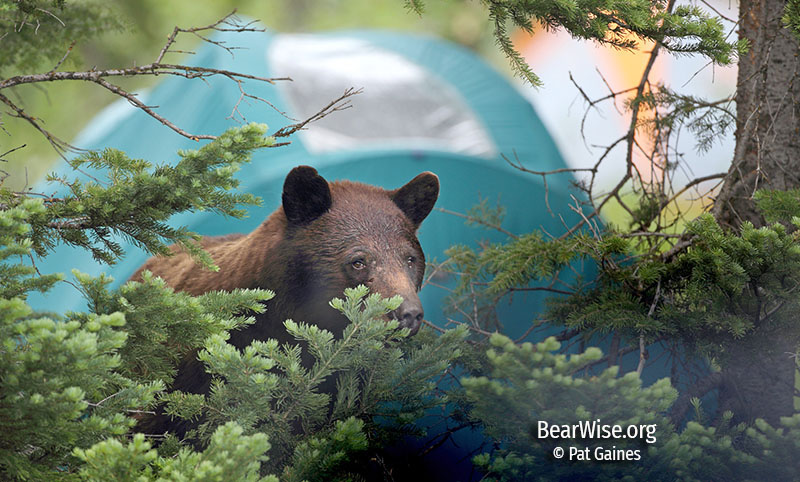
Bears quickly learn from experiences and have great memories. If a bear gets rewarded with an easy meal, it learns to check out other campsites and teaches its cubs to do the same.
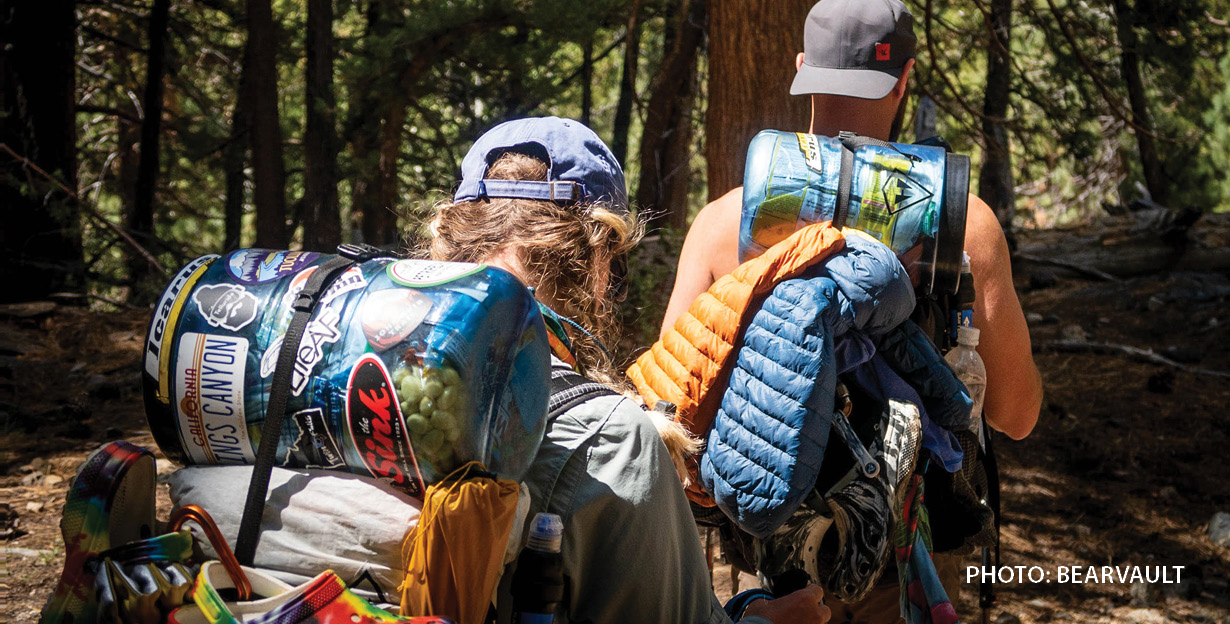
Bear Canister or Bear Hang?
Bear-resistant canisters are increasingly popular and now mandated in some areas. Many people find using a canister easier and less subject to human error than trying to properly hang food.
Canisters are designed to be left on the ground. Even the best canister may fail if dropped from hanging height. Pad well if you must hang.
Check local trail guidelines and regulations before you leave. Hanging food may still be required in some areas.
Backpacking with Dogs?
Keep dogs on non-retractable leashes at all times, even in camp. Store dog food with other food and scented products. Learn more about bears and dogs.
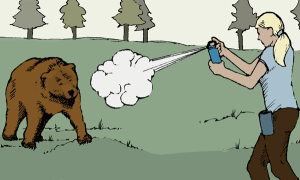
Bear spray is the safest, easiest, most effective way to deter an aggressive bear.
NEVER pre-spray anything. Bear spray is a deterrent, not a repellent.