
Raising Chickens in Bear Country
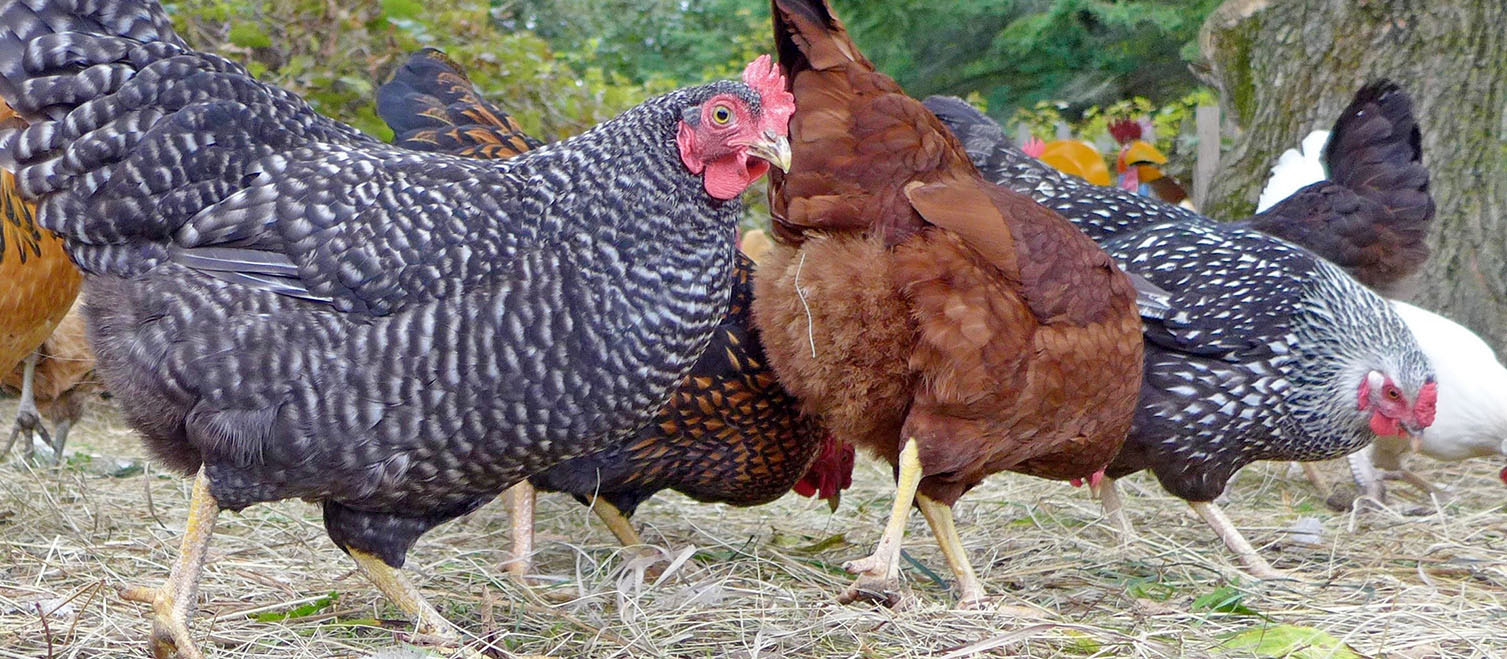
Everything loves a good chicken dinner with a side of eggs and chicken feed. Leaving your flock unprotected makes your chickens easy pickings for a wide range of hungry critters, including bears.
Chickens Are Fast Food for Bears
Chickens and eggs are delicious and nutritious. Just three chickens are about 4,500 calories—almost two days’ worth of nutrition for a bear. A dozen eggs add up to 900 calories. Chicken feed is a nutritious, high-calorie mix of carbs, proteins, fats, vitamins and minerals that weighs in at about 1,500 calories per pound.
Bears that help themselves to easy chicken dinners often pay with their lives. There’s nothing sustainable or inspiring about that. Be BearWise and you can have chickens and eggs without endangering bears.
Don’t Wait Until It’s Too Late
Haven’t had any issues? You will. More than 11 million households with backyard poultry give hungry wildlife excellent odds of finding dinner when they go exploring. Losing your flock is heartbreaking, especially when it could have been prevented. Starting over is expensive and depressing.
How to Protect Your Flock from Bears
Build BearWise
- Choose a sturdy coop with a strong roof.
- Locate your coop away from overhanging trees and dense cover. Keep the area around the coop and yard free of other attractants and hiding places.
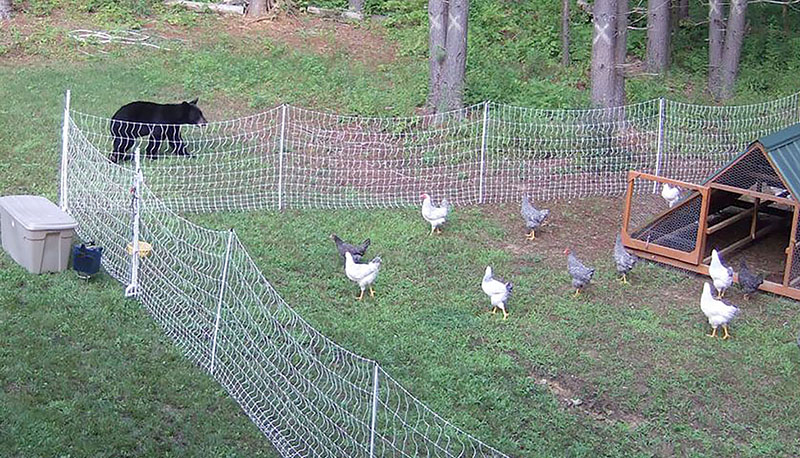
- Use electric fencing around the coop and chicken runs, powered up 24/7.
- Lock all access doors and windows in the chicken coop at night. Automatic locks are a good option.
- Store feed in a bear-resistant container or inside a sturdy locked building (not in the chicken coop or on the porch). Plastic tubs won’t keep bears out.
NOTE: Motion-activated lights and noisemakers are not long-term solutions.
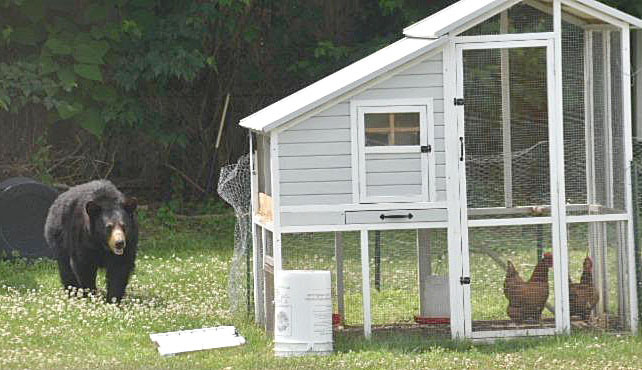
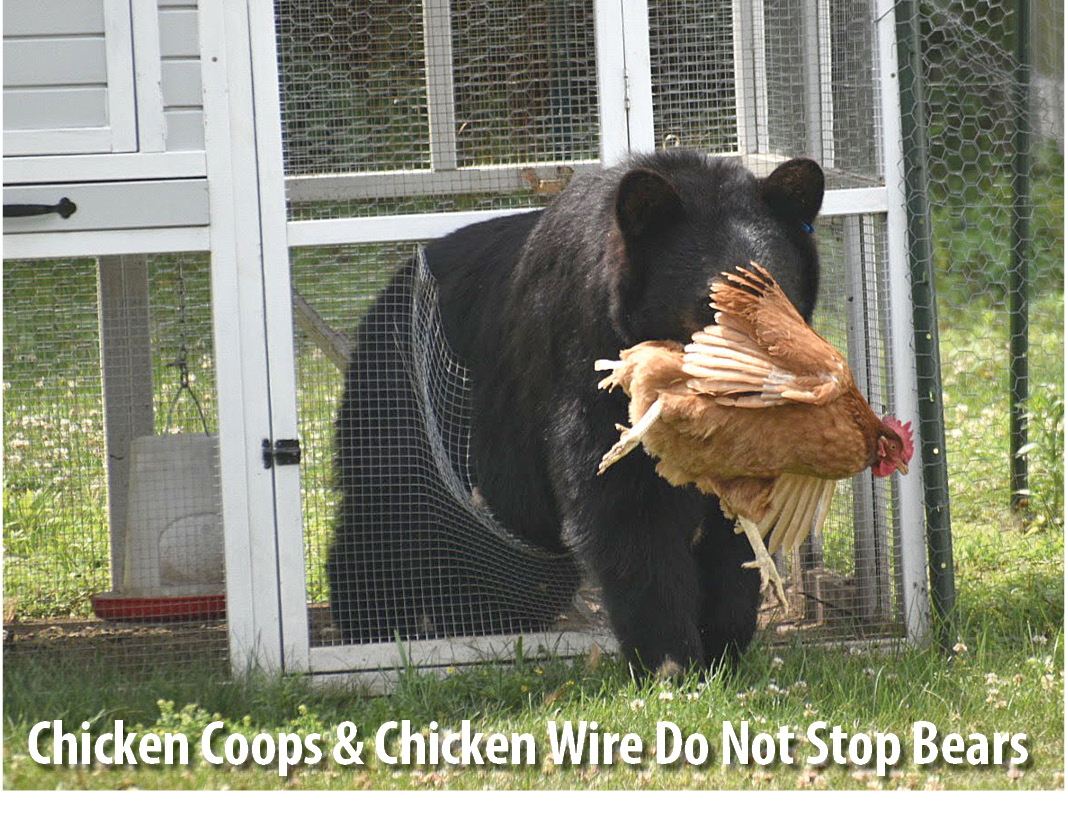
A hungry bear is strong enough to break through materials that keep out most other critters, including skunks, raccoons, coyotes, cougars, bobcats, opossums, foxes, weasels, snakes, birds of prey, dogs and cats.
Power Up for 24-Hour Protection
A properly installed and maintained electric fence is the most reliable, effective and long-lasting way to keep bears out of your coop and chicken yard. When a bear’s super-sensitive lips, nose or tongue come in contact with a “hot” wire, the bear has an experience it never wants to repeat.
BearWise Fast Facts: Electric Fencing for Chickens
- Minimum of 3 strands of wire (5 or 6 are better).
- Lowest wire: 7 – 9 inches above ground (or a few inches lower to also keep out skunks, raccoons, etc.).
- Use hardware cloth inside the electric fence to keep chickens away from hot wires.
- Highest wire: 36 – 42 inches above ground.
- Space wires 8 – 10 inches apart. Narrower spacing (more wires) is better.
- Energizer: minimum 6,000 volts, with at least 0.5 output joules (0.7 for grizzlies).
- Remove vegetation anywhere near wires to prevent shorting out the fence.
- Test fence voltage regularly.
Learn more about energizers, grounding the fence, dry soil options, critical maintenance and more: BearWise.org/keep-bears-out/electric-fencing/
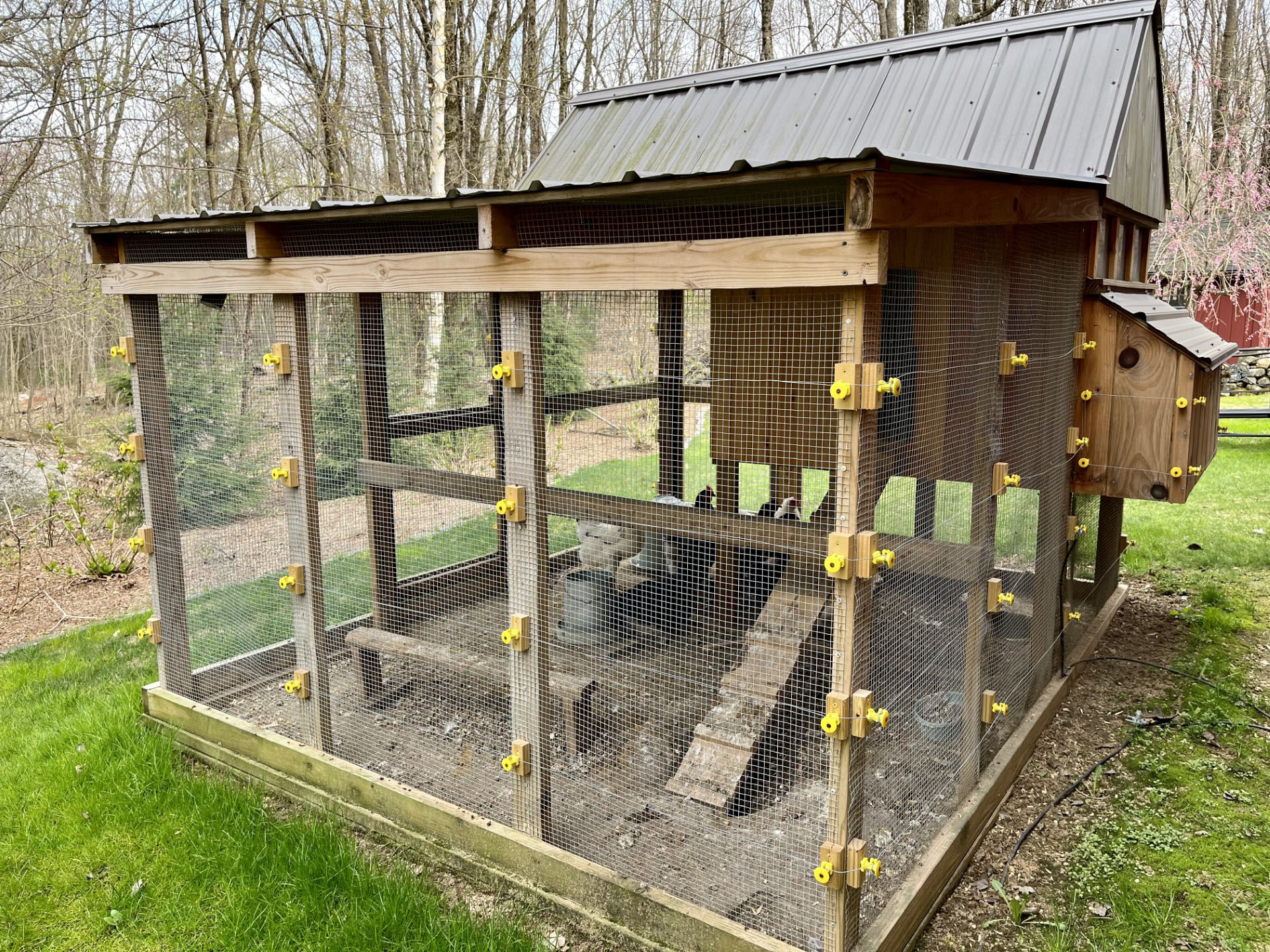
The cost of electric fencing materials adds up to far less than the cost of replacing your flock and coop.
Getting zapped does not harm people, pets or wild animals, but it does teach bears a life-saving lesson.
Before You Get Crackin’
Most people don’t raise chickens to save money on eggs. Good thing. Baby chicks are “cheep,” but raising them and maintaining a healthy flock is not. If you’re thinking about getting backyard chickens, ask your HOA, community or county about any regulations before investing in chickens or installing an electric fence.
And check out the resources listed below for a good idea of what you’ll need and how long it takes from chicks to omelets.
Helpful Resources:
- BearWise Bulletin #6: Raising Chickens in Bear Country
- BearWise Bulletin #3: Electric Fences Keep Bears Out
- Article: Protecting Chickens, Small Livestock, Bees and More
- Article: Raising Chickens in Bear Country
- State Wildlife Agencies – Some state wildlife agencies offer help with fence design and installation, provide loaner fencing and even have programs to help offset costs. Find links to state agencies on BearWise.org.
- Your county’s Cooperative Extension Service.
- CDC.gov/birdflu – Bird flu is highly contagious; an infected flock must be destroyed. Infected carcasses can infect birds of prey, scavengers and bears.
- BackyardChickens.com
Thanks for doing your part to
keep chickens safe and bears wild.
keep chickens safe and bears wild.