
Black Bear or Grizzly Bear?
Black bear with her cubs
(Neal Herbert, NPS)
Female grizzly nursing cubs in Yellowstone
(Jim Peaco, NPS)
Black bear
(Pat Gaines)
Grizzly bears
(Nate Bowersock)
Black bears eating acorns in Yosemite
(Drew Wharton)
Grizzly bear
(Derek Reich, Zöoprax Productions)
Where do bears live in North America?
American black bears live throughout the United States, Canada and parts of Mexico.
How many black bears are there in North America? No one knows the exact number, but the total population is estimated at around one million, with about half of North American black bears living in at least 40 states, including where grizzly bears live. While black bears greatly outnumber grizzlies, knowing how to tell the difference is important if you live in or travel to grizzly country.
Grizzly bears live in Montana, Wyoming, Idaho, Washington, Alaska and Canada.
Alaska and western Canada are home to most of the approximately 60,000 grizzly bears that live in North America. South of the Canadian border, grizzly bears now live in Montana, Wyoming, Idaho and Washington, where they have been protected under the Endangered Species Act since 1975.
How Can I Tell the Difference?
People often picture grizzly bears as big and brown, but both species come in the same colors and their weight ranges overlap. A large male black bear can outweigh a female grizzly.
Color of Bears
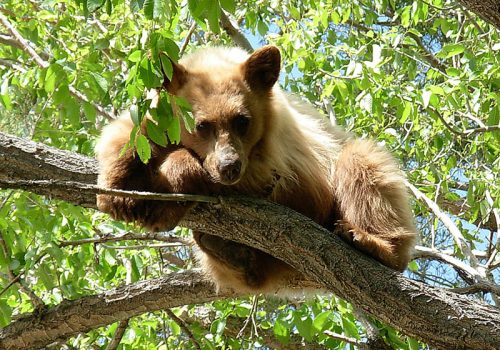
Not all black bears are black and not all grizzlies look “grizzled.”
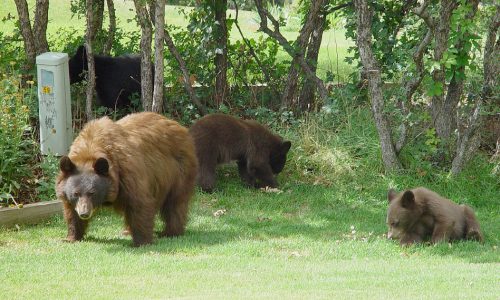
Both species come in the same range of colors, from black, brown and cinnamon to blonde. While black bears can have black coats (sometimes with a white chest blaze), in western North America, many American black bears sport brown or cinnamon coats.
Since black bears live everywhere grizzly bears live, it’s easy to see why split-second identification might be difficult.
Size of Bears
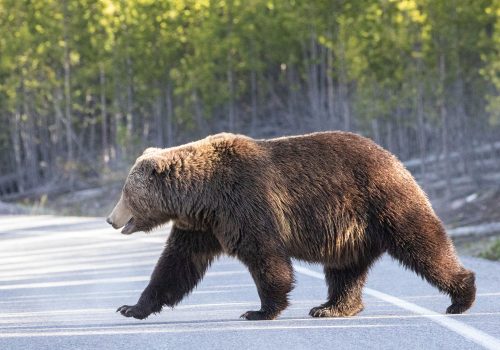
The weight of an individual bear depends on many factors, including the bear’s sex, age, diet and time of year. Most bears weigh the least in the spring shortly after emerging from the den and the most in late fall just before hibernation.
Male bears of both species generally weigh 30% to 40% more than female bears, but it can be difficult to distinguish between a male bear and a female bear unless there are cubs present.
In the Western states where both species live, adult black bears can weigh between 150 to more than 500 pounds. South of the Canadian border, adult grizzly bears can weigh between 250 and more than 600 pounds. Both black bears and grizzly bears that have steady access to human-provided foods often weigh much more than bears eating a diet of natural foods.
Since the weight range for black bears and grizzly bears overlaps, size alone is never a reliable way to distinguish between species.
Shape of Bears
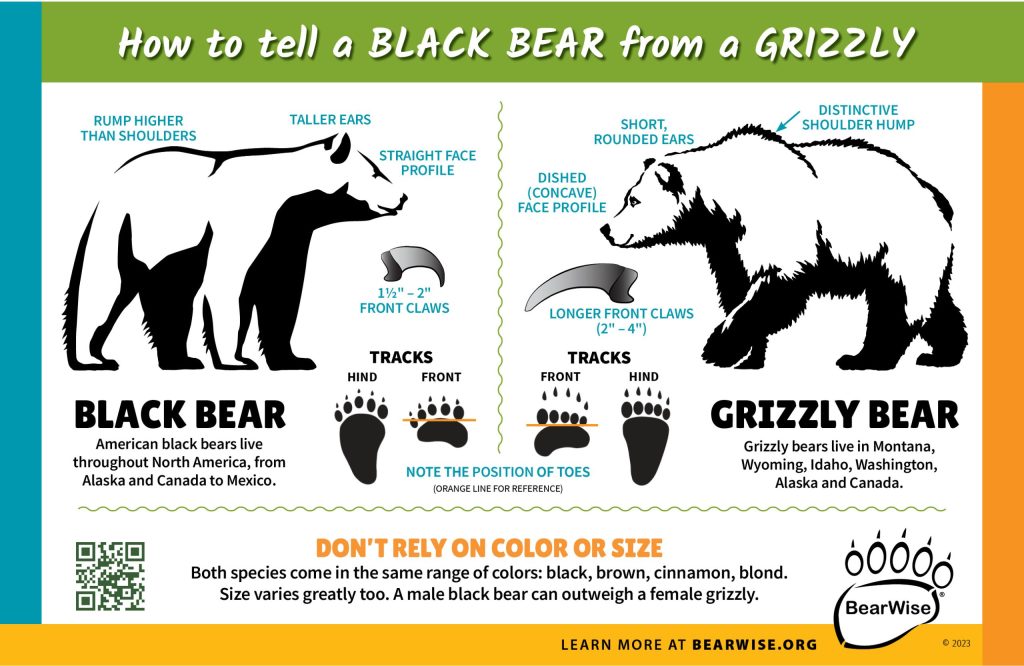
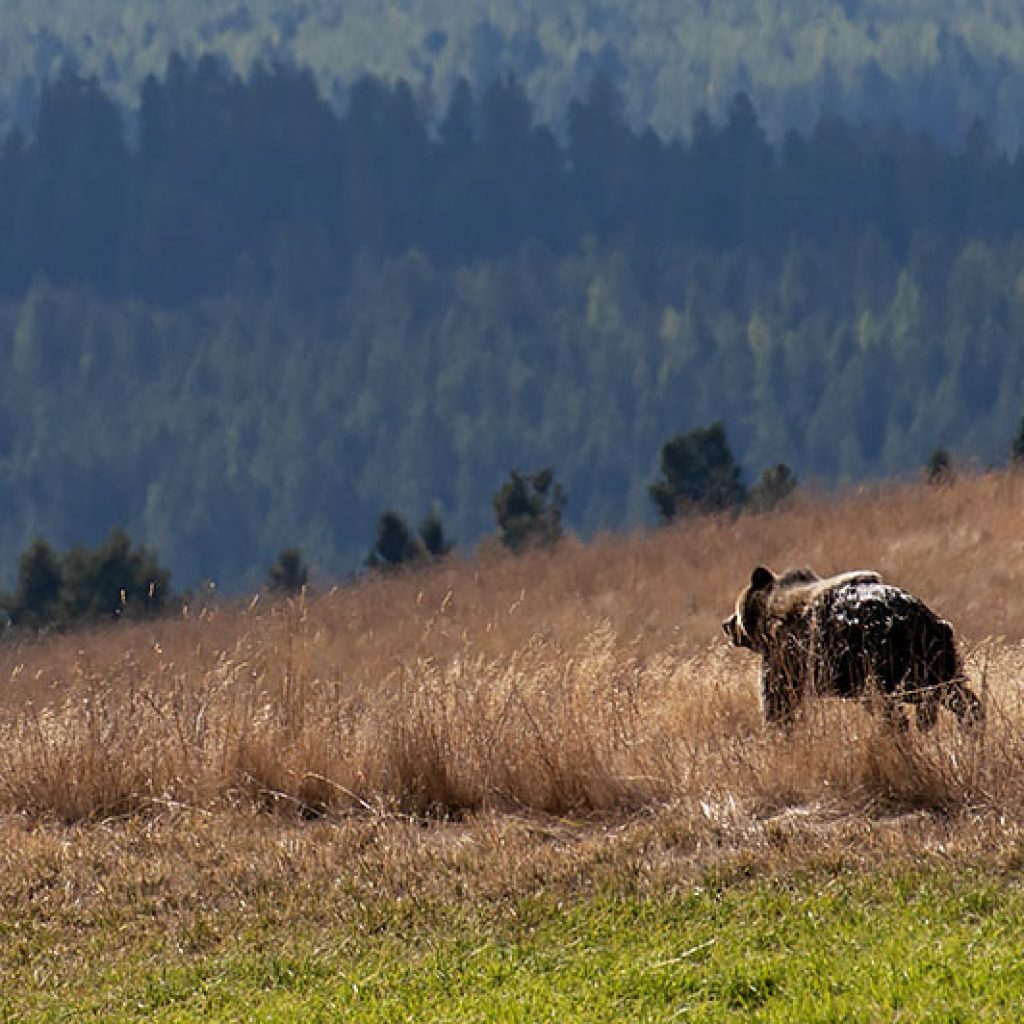
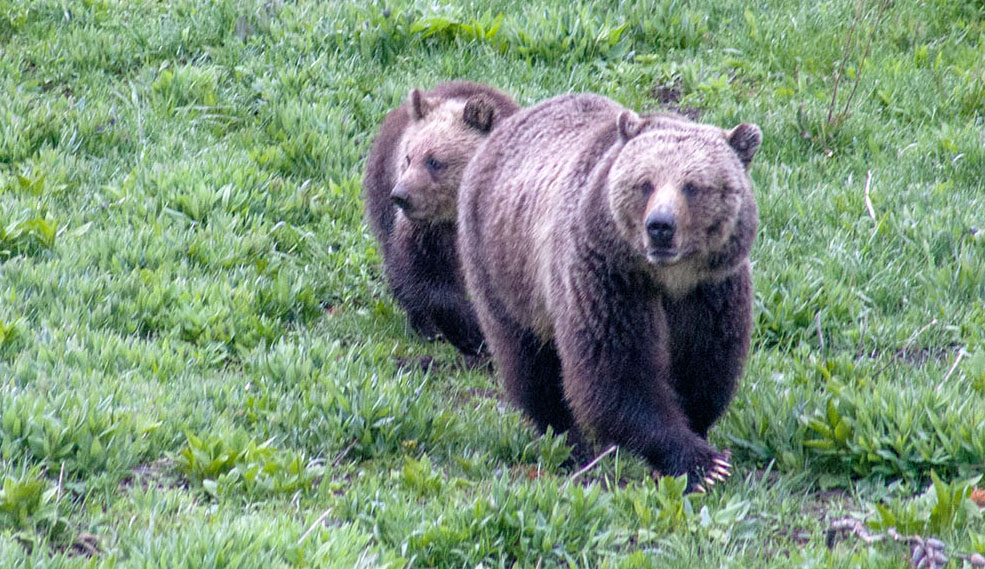
Grizzly bears have a distinct concave or dish-shaped facial profile, humped shoulders, long front claws (2 – 4 inches long) and small, rounded ears. Black bears have a straighter facial profile, more distinct (taller) ears, and shorter curved front claws (1½ – 2 inches long). Face shape, ears and claws are reliable means of telling the two species apart.
Black bears don’t have a shoulder hump, but in some postures can look as if they do. When a black bear stands with its head low and shoulders protruding or leans forward with its shoulder blades pushed back it can create the illusion it has a true shoulder hump.
Bear Tracks
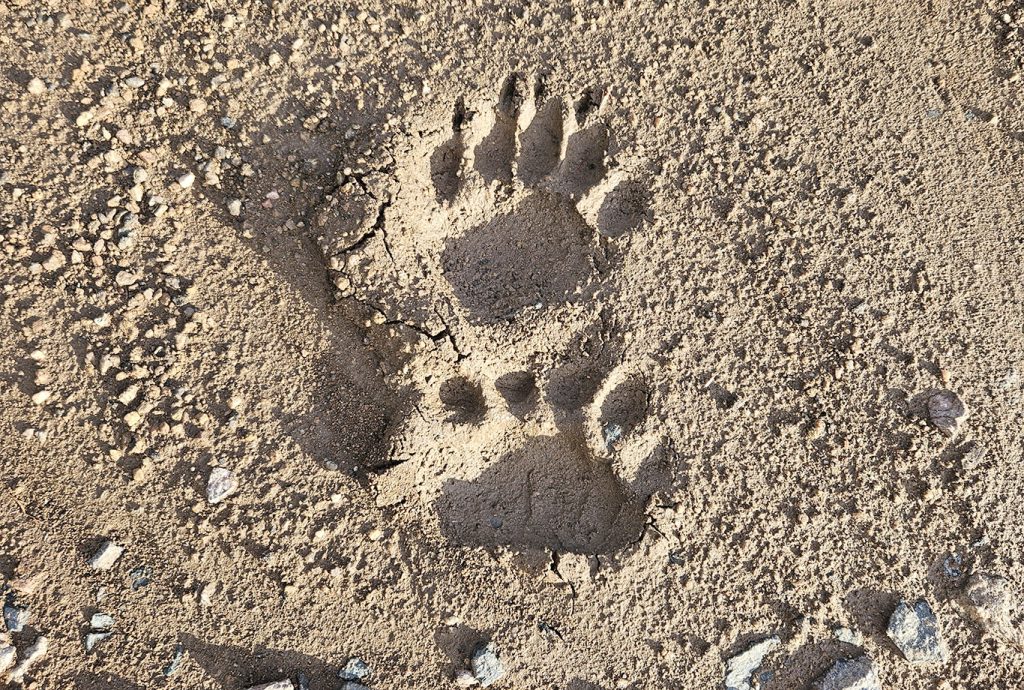
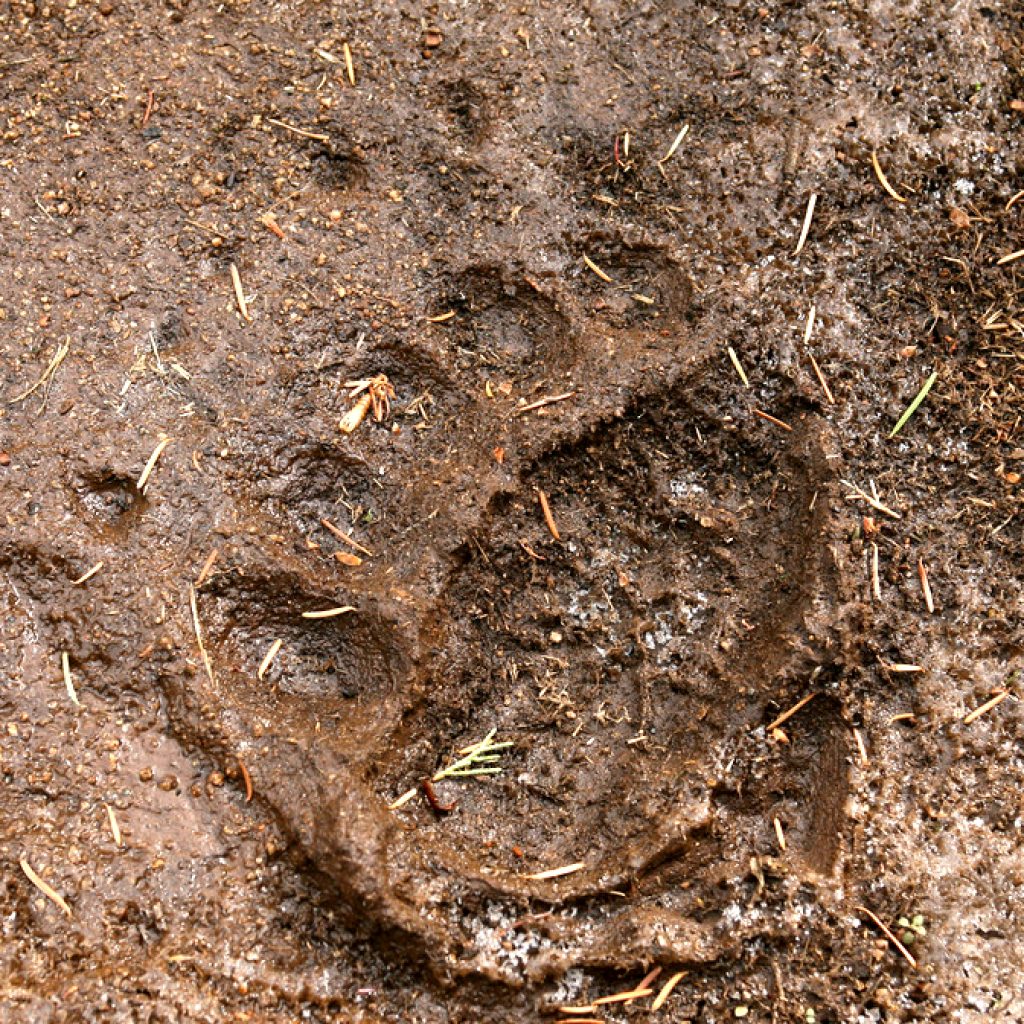
A bear track left in the snow or mud clearly shows that the alignment of the toes and the distance between the toe pads and claws are distinctively different for black bears and grizzly bears.
If you draw a straight line just above the toe pad (see illustration above) and all the toes are above the line, it’s likely a grizzly bear. If one toe falls below the line, it’s probably a black bear.
Size of Home Ranges
Bears travel farthest when food is harder to find, especially in spring. An individual bear may travel between 20 and 40 miles in a single day.
Adult bears are usually solitary (except females with offspring), but they’re not territorial and their home ranges frequently overlap.
Male black bear have home ranges up to 300 square miles; female black bears only about 50 square miles. Grizzly bears need a lot of room in order to thrive: grizzly males roam from 200 to over 600 square miles; female grizzlies between 50 and 300 square miles.
Want to Learn More?
Courtesy of the Washington Department of Fish & Wildlife
Heading into Bear Country?
Get Bear-Prepared and Be BearWise
 Carry bear spray and know how to use it
Why? Because bear spray is the safest, easiest to use and most effective way to deter an aggressive bear.
 Watch this video:
Staying Safe in Bear Country
A comprehensive and expert guide to staying safe in bear country, understanding bear behavior, body language and vocalizations and the best responses to all types of encounters. (Source: International Association for Bear Research and Management)
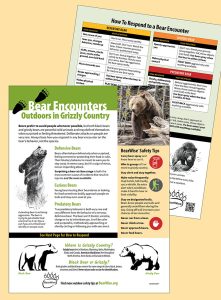 Heading into Grizzly Country?
Get prepared with our Encounters in Grizzly Country Fact Sheet. How you respond in a bear encounter depends on the bear’s behavior, not the species. We provide behavioral clues that will help you tell the difference between a defensive bear, a curious bear or the rare predatory bear, and how to behave in each type of encounter. Plus what to do if you have an encounter at close range or if a bear comes into your camp. Also includes important BearWise Safety Tips and the Bear Spray Basics, including how to buy, how to carry and how to use effectively.
BearWise Safety Tips
Trusted Grizzly Bear Resources
State Wildlife Agencies
Montana Fish, Wildlife, and Parks
Interagency Grizzly Bear Committee
- IGBC Bear-Resistant Products – Find bear-resistant canisters, coolers, panniers, boxes, portable electric fences and other products that have been tested and certified bear-resistant.
- IGBC Food Storage Guidelines and interactive map – Properly storing food, garbage and other attractants is key to preventing conflicts with bears and is required in many parks, forests, campgrounds and wilderness areas in grizzly country.
- IGBC Encounter Advice – Guidelines and expert advice on understanding and responding to all types of encounters.
U.S. Fish & Wildlife Service
Learn About the Grizzly Bear: Detailed information on the history of grizzly bears in the lower 48 states, updated maps of the recovery zones, grizzly bear annual status reports, safety information for landowners, additional links and resources.