
Power Up to Protect Your Stuff
Power Up to Protect Your Stuff
Electric Fences Keep Bears Out
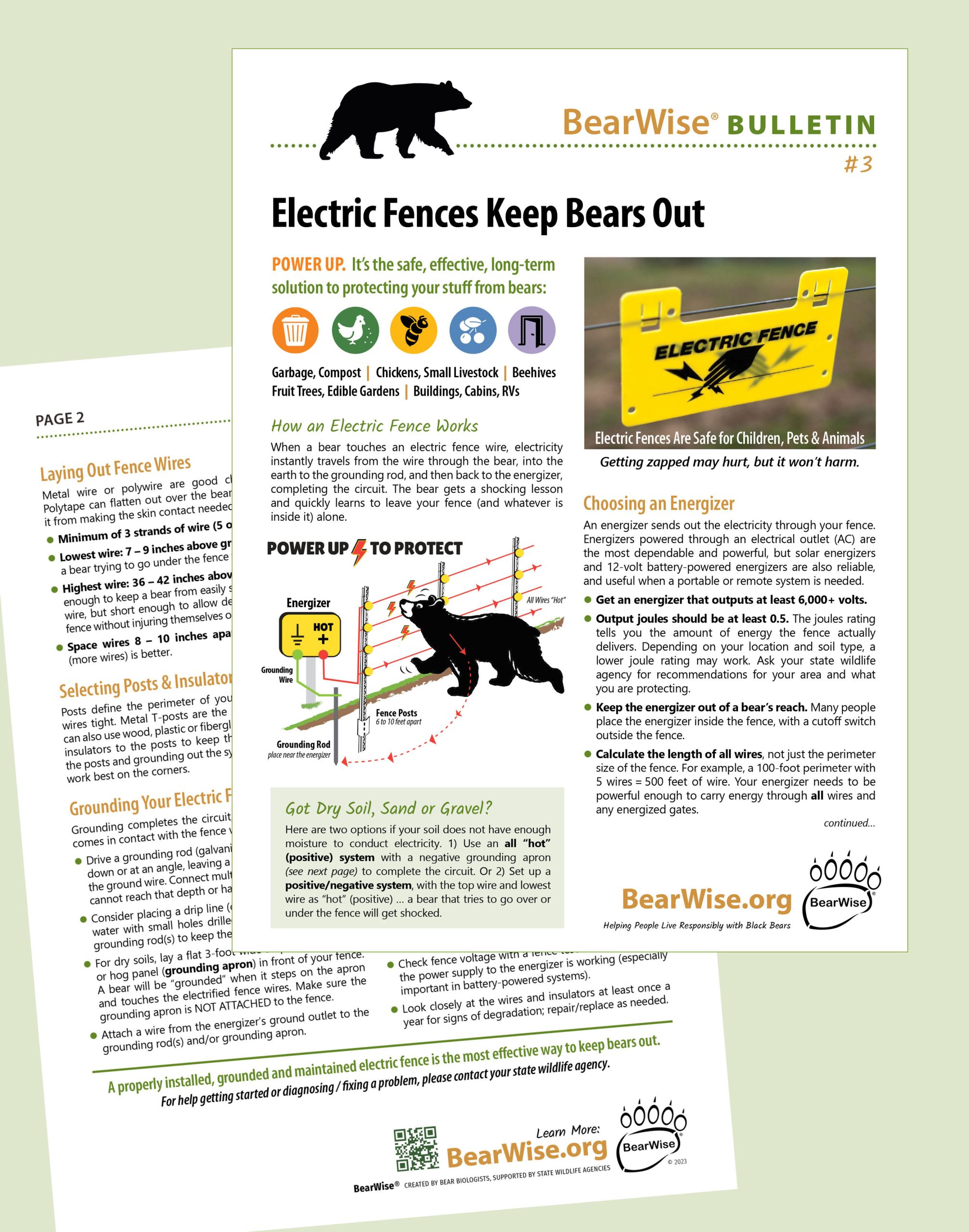
Power Up. It’s the safe, effective, long-term solution to protecting your stuff from bears:

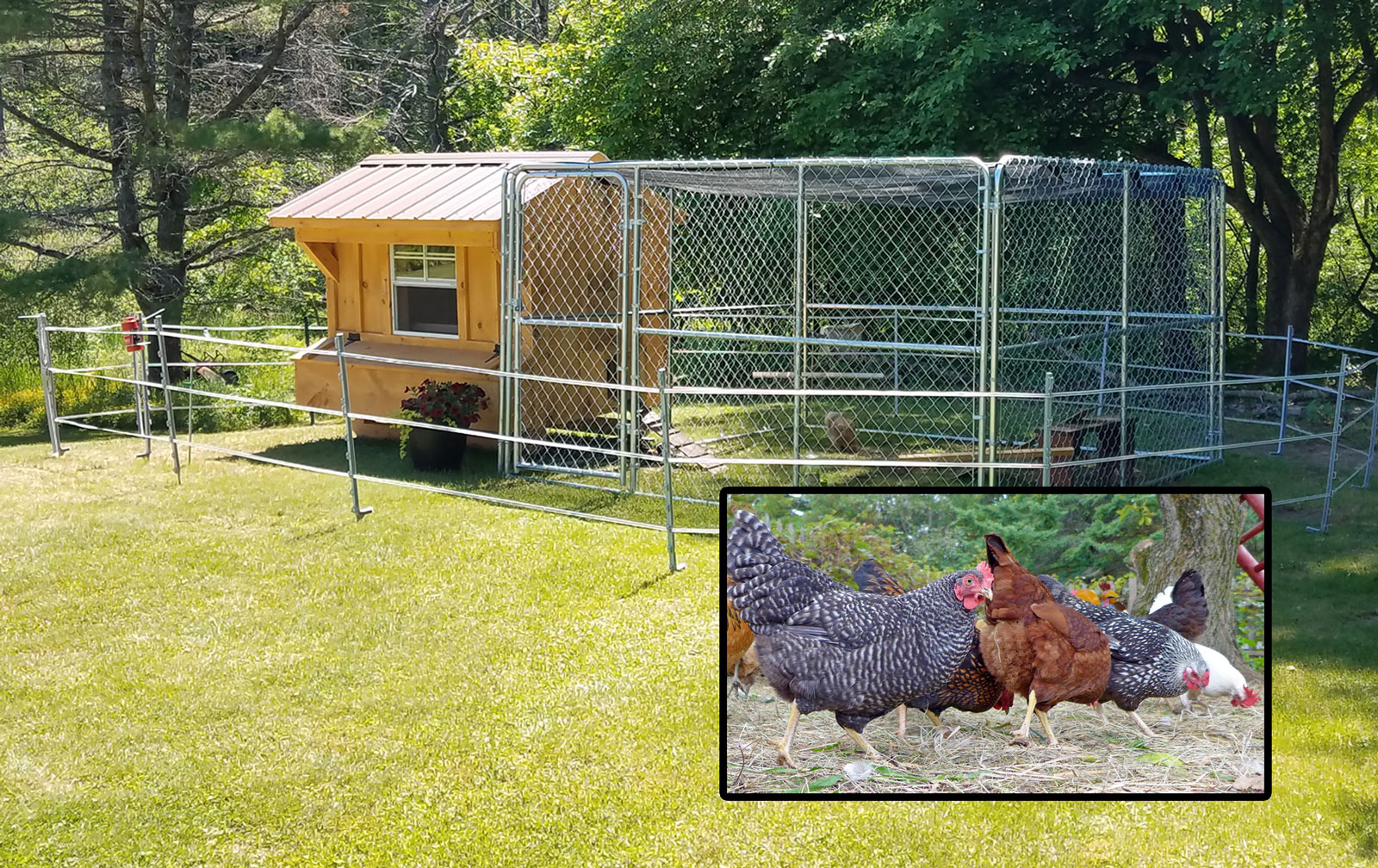
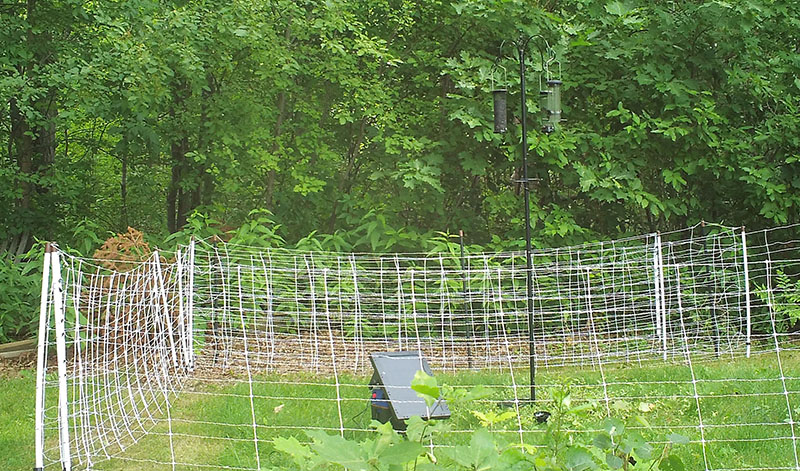
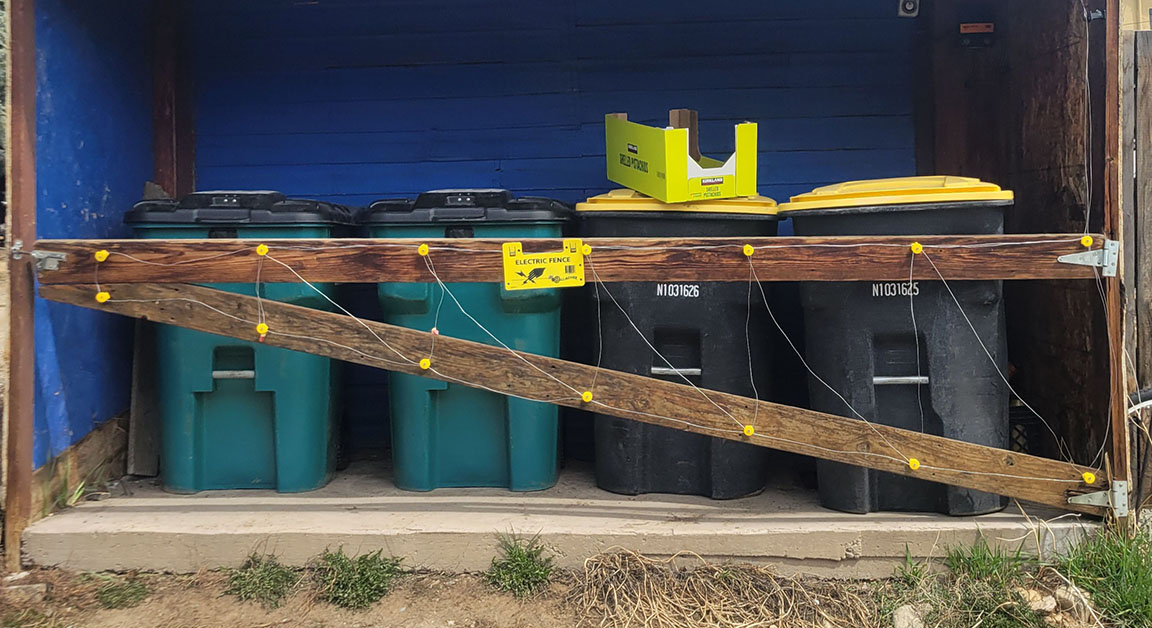
Garbage, Compost | Chickens, Small Livestock | Beehives | Fruit Trees, Edible Gardens | Buildings, Cabins, RVs
How an Electric Fence Works
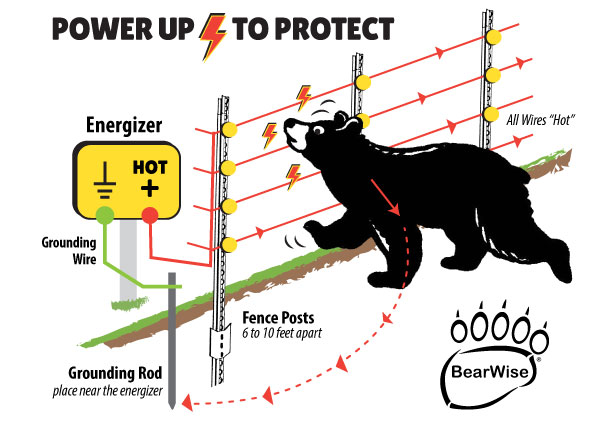
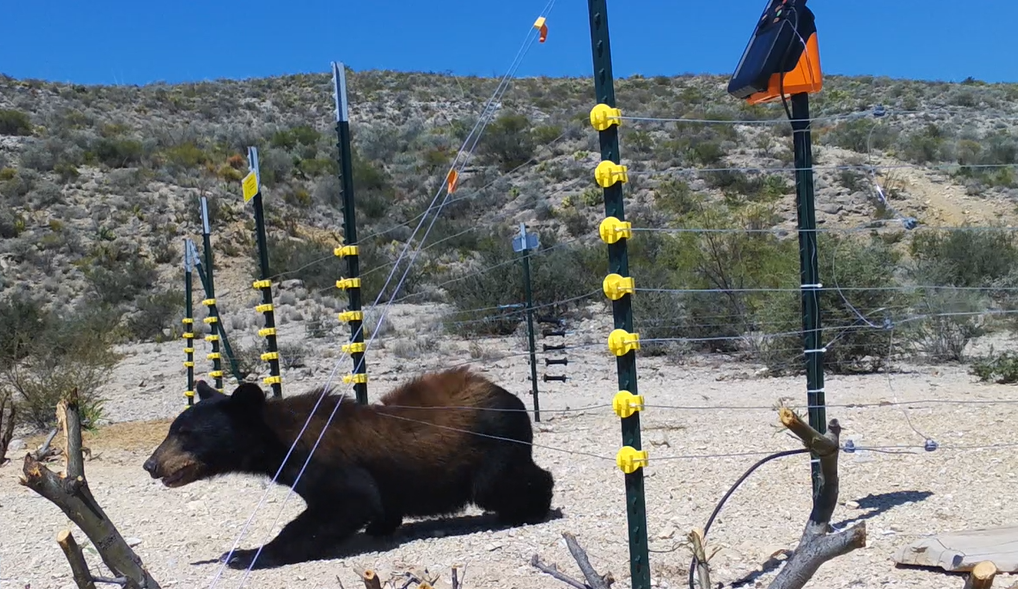
When a bear touches an electric fence wire, electricity instantly travels from the wire through the bear, into the earth to the grounding rod, and then back to the energizer, completing the circuit. The bear gets a shocking lesson and quickly learns to leave your fence (and whatever is inside it) alone.
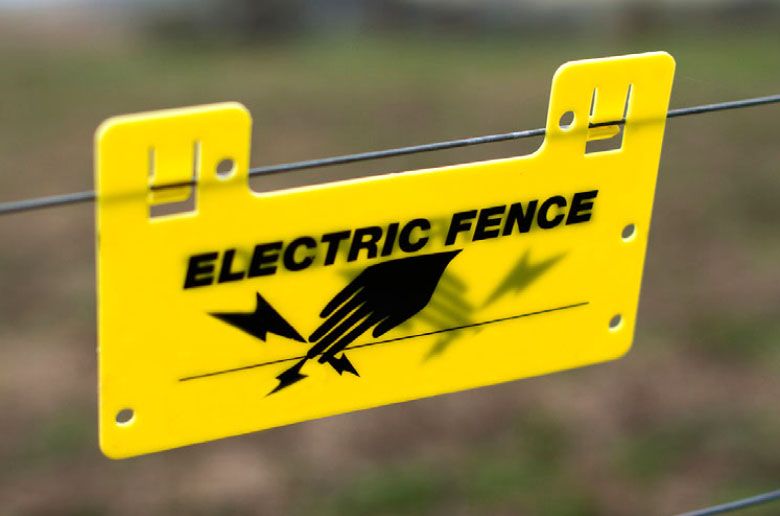
Electric fences are safe for children, pets & animals.
Getting zapped may hurt, but it won’t harm.
Watch what happens when a nosy bear meets an electric fence.
(Video courtesy of New Hampshire Fish & Game Department)
The most effective way to keep bears out…
… is a properly installed, grounded and maintained electric fence.
Choosing an Energizer
An energizer sends out the electricity through your fence. Energizers powered through an electrical outlet (AC) are the most dependable and powerful, but solar energizers and 12-volt battery-powered energizers are also reliable, and useful when a portable or remote system is needed.
- Get an energizer that outputs at least 6,000+ volts.
- Output joules should be at least 0.5. The joules rating tells you the amount of energy the fence actually delivers. Depending on your location and soil type, a lower joule rating may work. Ask your state wildlife agency for recommendations for your area and what you are protecting. Got grizzlies? Use 0.7 joules.
- Keep the energizer out of a bear’s reach. Many people place the energizer inside the fence, with a cutoff switch outside the fence.
- Calculate the length of all wires, not just the perimeter size of the fence. For example, a 100-foot perimeter with 5 wires = 500 feet of wire. Your energizer needs to be powerful enough to carry energy through all wires and any energized gates.
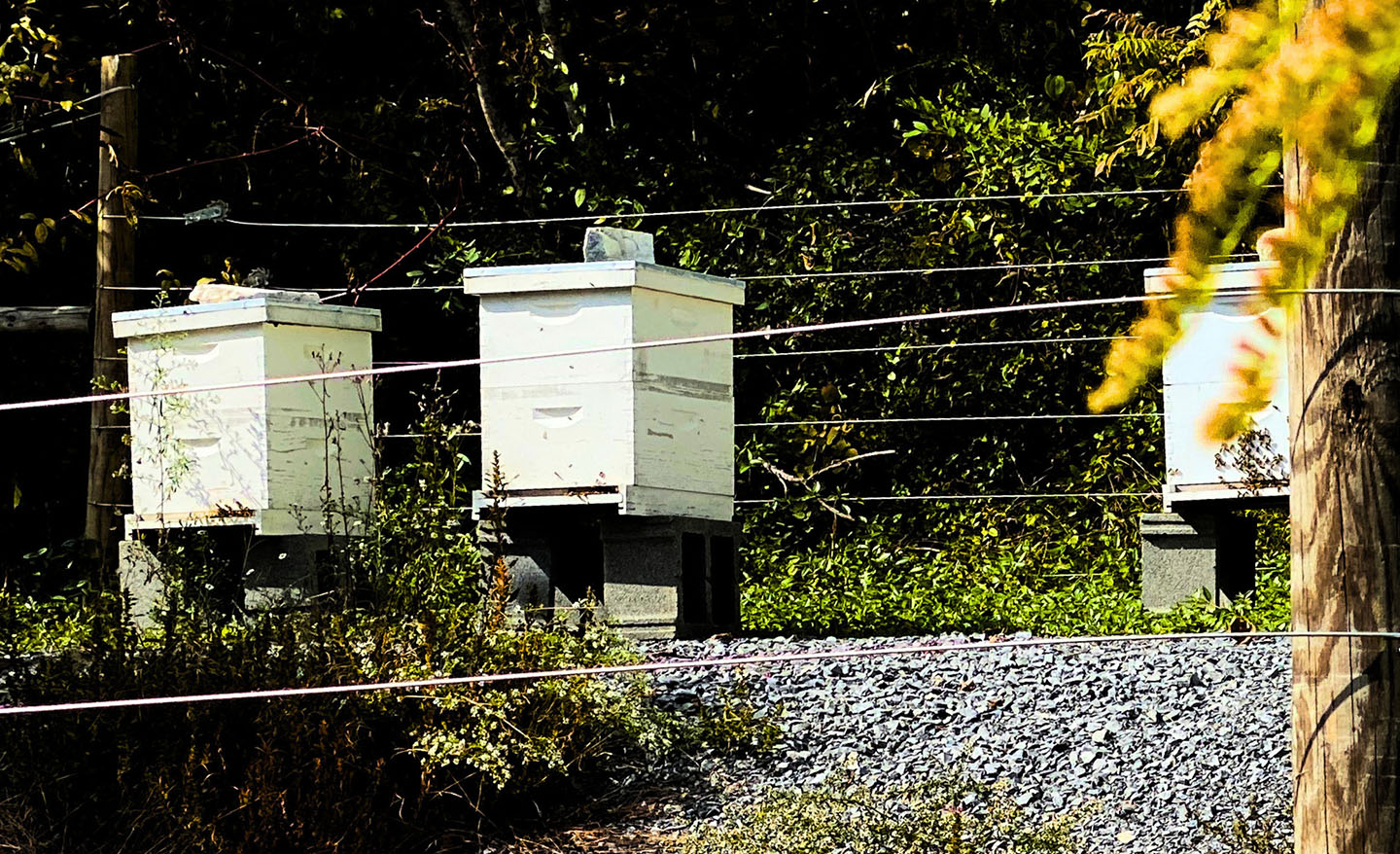
Laying Out Fence Wires
Metal wire or polywire are good choices for fences. Polytape can flatten out over the bear’s coat, preventing it from making the skin contact needed to deliver a shock.
- Minimum of 3 strands of wire (5 or 6 are better).
- Lowest wire: 7 – 9 inches above ground to ensure that a bear trying to go under the fence will get shocked.
- Highest wire: 36 – 42 inches above ground will be tall enough to keep a bear from easily stepping over the top wire, but short enough to allow deer to safely clear the fence without injuring themselves or damaging the fence.
- Space wires 8 – 10 inches apart. Narrower spacing (more wires) is better.
Selecting Posts & Insulators
Posts define the perimeter of your fence and keep the wires tight. Metal T-posts are the most popular, but you can also use wood, plastic or fiberglass posts. Attach plastic insulators to the posts to keep the wires from touching the posts and grounding out the system. Longer insulators work best on the corners.
Grounding Your Electric Fence
Grounding completes the circuit, ensuring that whatever comes in contact with the fence will get shocked.
- Drive a grounding rod (galvanized steel) six feet straight down or at an angle, leaving a few inches for connecting the ground wire. Connect multiple grounding rods if you cannot reach that depth or have dry soil.
- Consider placing a drip line (or a 5-gallon bucket full of water with small holes drilled in the bottom) near the grounding rod(s) to keep the soil moist.
- For dry soils, lay a flat 3-foot wide strip of chicken wire or hog panel (grounding apron) in front of your fence.
A bear will be “grounded” when it steps on the apron and touches the electrified fence wires. Make sure the grounding apron is NOT ATTACHED to the fence. - Attach a wire from the energizer’s ground outlet to the grounding rod(s) and/or grounding apron.
Got Dry Soil, Sand or Gravel?
If your soil does not have enough moisture to conduct electricity:
1) Use an all “hot” (positive) system with a negative grounding apron (see next page) to complete the circuit.
2) Set up a positive/negative system, with the top wire and lowest wire as “hot” (positive) … a bear that tries to go over or under the fence will get shocked.
Maintaining Your Electric Fence
Ongoing maintenance is the key to keeping your fence working 24/7. Don’t wait for a bear ‘break-in’ to figure out what went wrong. Walk around your fence every few days to identify possible problems.
- If you hear clicking (which indicates energy is arcing out of the fence), look for something that is grounding out (shutting down) the fence, such as a broken / frayed wire or a loose wire touching something, including vegetation.
- Keep vegetation low. Vegetation touching the fence, especially if wet, can ground out the system. It can also accelerate battery drain on solar-powered energizers.
- Look for loose wires or damage caused by other animals.
- Check fence voltage with a fence tester often and verify the power supply to the energizer is working (especially important in battery-powered systems).
- Look closely at the wires and insulators at least once a year for signs of degradation; repair/replace as needed.
For help getting started or diagnosing / fixing a problem, please contact your state wildlife agency.
Learn More:
- Download BearWise’s bulletin: Electric Fences Keep Bears Out
- Read our article: Protecting Chickens, Small Livestock, Bees and More
- Read our article: Raising Chickens in Bear Country
- Deterring Bears with Electric Fencing: A Beginner’s Guide (PDF)
- Download Electric Fence specifications approved by the Interagency Grizzly Bear Committee (at the end of the 30-page product list).
- “How to Use Electric Fencing to Secure Your Outdoor Attractants” video shows how to secure beehives, trashcans, deer feeders, crops, livestock, bird feeders, and other items that may attract black bears or other unwanted wildlife.
-
USFS Approved Portable Electric Fence Systems were tested by the Missoula Testing and Development Center (MTDC) and approved by the US Forest Service for use in the Northern Continental Divide Grizzly Bear Ecosystem (NCDE). Although the requirements listed refer to the minimum specifications needed for fences used by backpackers and outfitters to keep grizzly and black bears away from food, garbage and other attractants, rural homeowners looking for portable or temporary electric fencing solutions will find the detailed instructions, photos and troubleshooting tips helpful.
Top photo: Texas Parks & Wildlife