Effective Bear Ordinances / Regulations
Garbage isn’t the only thing that attracts bears. Creating ordinances and bylaws that address community issues will set standards and make it easier for communities and agencies to make sure everyone does their part to protect people, property and bears.
Most towns / counties can enact ordinances anytime; annual changes are common. HOAs have a process for changing or passing bylaws. Bring leaders a well-crafted sample and show how it will help save money, reduce conflicts and property damage, and make the community safer.
Examples of Ordinances/Bylaws That Create Lasting Change
- Store trash and garbage in bear-resistant containers or enclosures or inside a sturdy building until the morning of pick-up (for residents and businesses).
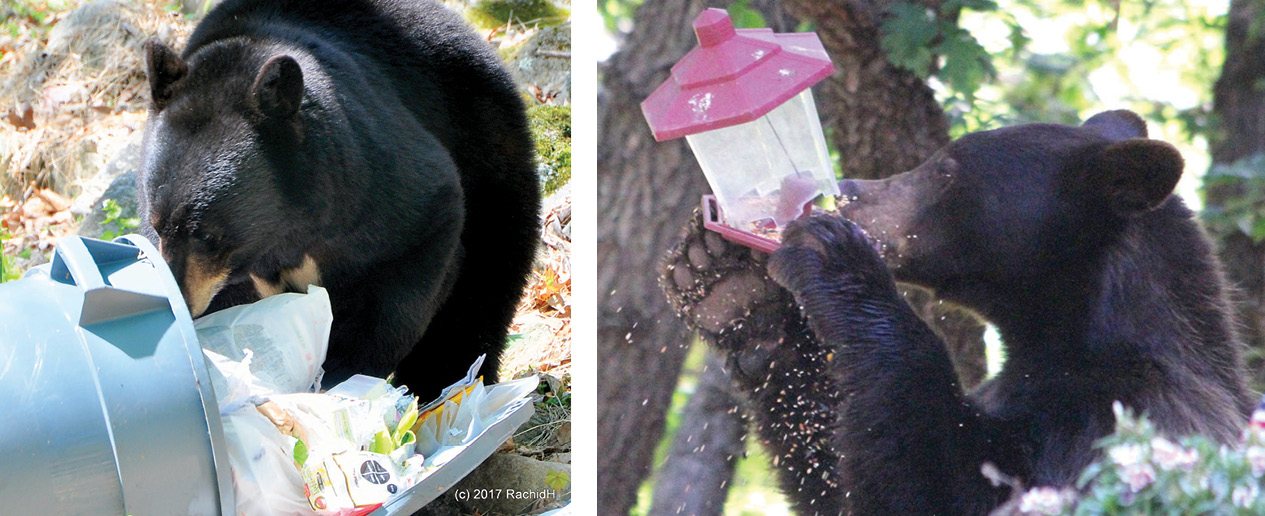
- Don’t feed birds (seeds, nectar, suet, other foods) during months when bears are active.
- Feeding wildlife or feral cats, or using other attractants to attract wild animals, including bears, deer, turkeys and raccoons, is not allowed at any time.
- Small backyard livestock (i.e. chickens, goats), beehives, and fruit trees must be protected by electric fencing.
While every community is unique, many causes of human-bear conflicts are universal.
Bear Ordinances in Action
Many towns, HOAs and communities have drafted and passed ordinances / regulations that support BearWise behavior. The ordinances can address such issues as wildlife-resistant trash storage, pet food storage, securing attractants, and feeding wildlife, including birds. Here are a few examples from across the country:
State of Virginia – Unauthorized Feeding of Wildlife Code
Covers all intentional or unintentional feeding of wildlife including placing, distributing or allowing the placement of food, minerals, carrion, trash or similar substances that attract wildlife in ways that could cause property damage, endanger any person or wildlife or create a public health concern.
“Garbage, bird feeders, fruit trees and backyard small livestock are universally what brings bears near people.”
Richard Beausoleil, Washington Department of Fish & Wildlife